Venice · Burano
Glass, Lace and Torcello by Public Boat
A full day by public boat through the northern lagoon, with Murano’s glass history, Burano’s painted houses and lace, and Torcello’s cathedral.
- Part of town
- the northern lagoon
- Give it
- a full day
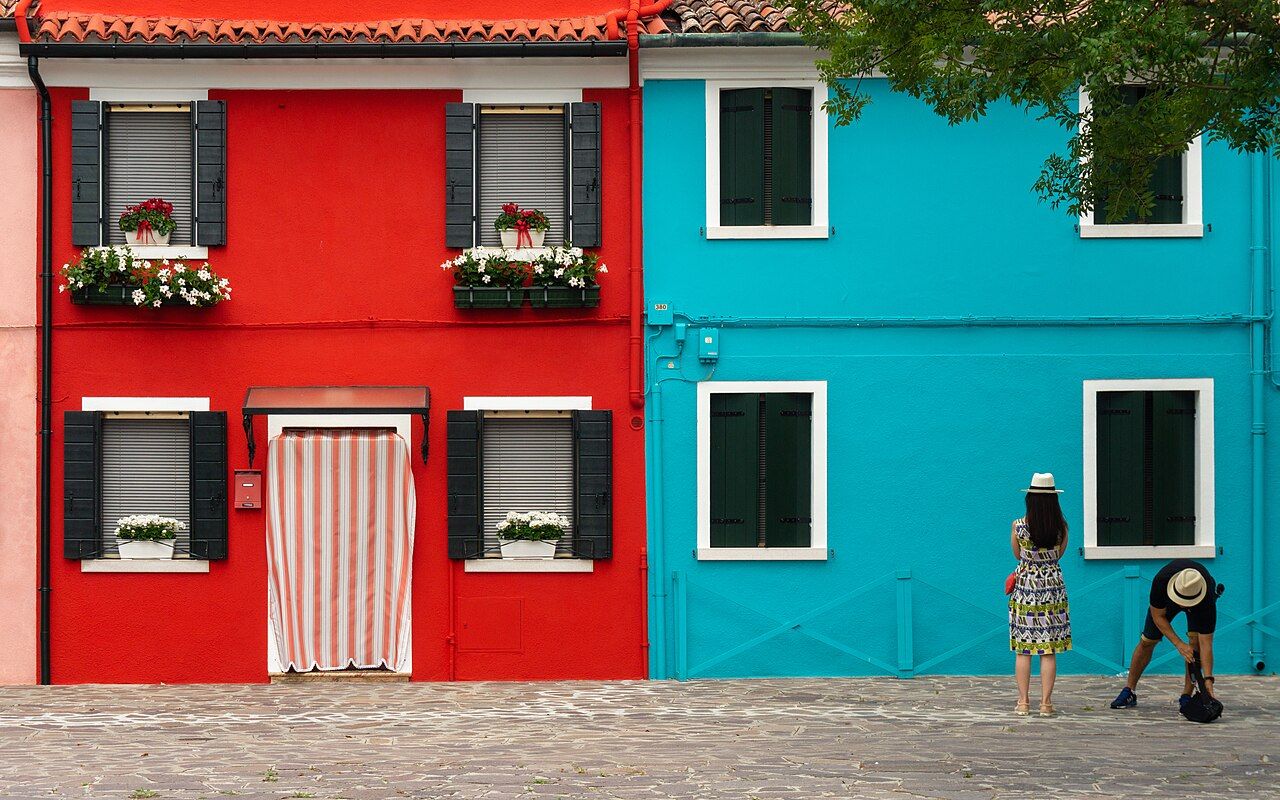
Line 12 runs from Fondamente Nove to Burano in about 40 minutes. We give the day to Murano, Burano and Torcello, with a different subject on each island.
- A full day in the northern lagoon.
- Line 12 runs from Fondamente Nove to Burano.
- Murano’s glass history, Burano’s painted houses and lace, and Torcello’s cathedral.
Morning: Burano
We begin with Burano’s painted houses. The island is known for their bright colors and for its lace; those two details make a simple way to take in the place. We can look at the houses first, then give the lace its own attention rather than treating the island as a single view.
The bell tower of San Martino leans visibly. It is a clear point of focus among the painted houses, and a reminder that Burano’s character is not only in its color. We keep the morning at the level of what is here: houses, lace and a leaning tower.
Line 12 gives a useful route detail for this part of the day: it runs from Fondamente Nove to Burano in about 40 minutes. We plan around the island, not a packed list of stops.
Next on our list: The Grand Canal on line 1
Midday: Murano
Murano brings the day to glass. Venice moved its glassmakers to the island in 1291 to keep fire away from the city. The date explains why Murano belongs in this itinerary; it is not just a name attached to glass, but the place Venice chose for the work.

The Murano Glass Museum tells the island’s glass history. We leave room for that history to be the center of the visit. After the houses and lace on Burano, the focus shifts to a material and the reason it became part of Murano’s story.
We like this change of subject in the middle of a full day. It keeps the islands distinct without asking us to compare them. Burano is known for its painted houses and lace; Murano’s story here is glass, shaped by the move from Venice.
The city and the islands make different frames for Venice; the city when the fog rolls in is another way into that contrast.
Late afternoon: Torcello
Torcello was settled before Venice and is now almost empty. That makes it a different kind of final stop: the day moves from the visible details of Burano and the history of Murano to a place defined by how little of it is inhabited now.
The cathedral of Santa Maria Assunta was founded in 639. Its Byzantine mosaics include a large Last Judgement. We can give the cathedral the time it needs, with the founding date and the mosaics as the two details to hold onto.
By late afternoon, the three islands have given us three clear subjects: lace and painted houses, glass, then an old cathedral on an island settled before Venice. We stop there, with Torcello’s mosaics as the last image of the day.