Lisbon · Lisbon
Tram 28 from End to End
A ride from Martim Moniz to Campo de Ourique follows the line through Graça, Alfama, the Baixa, Chiado and Estrela, with a calmer boarding point at the western end.
- Part of town
- Graça to Campo de Ourique
- Give it
- about an hour
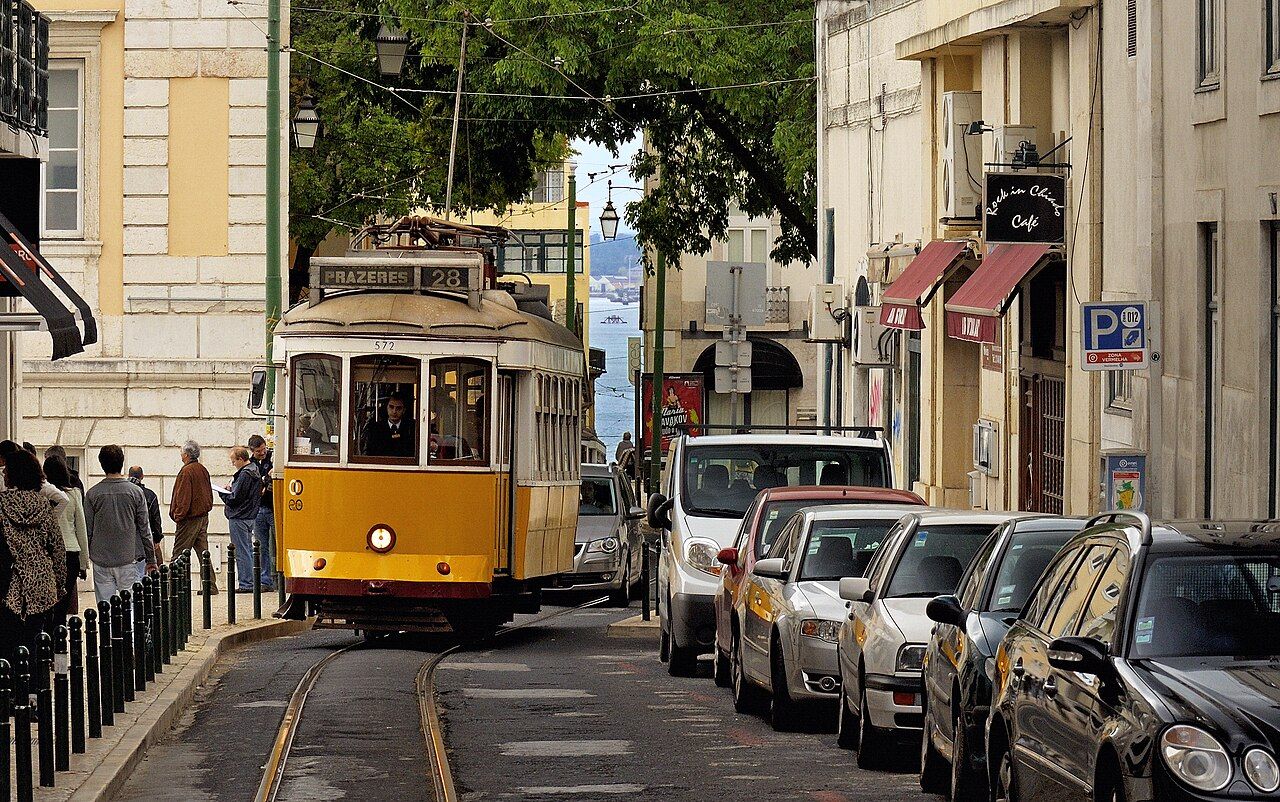
At Martim Moniz, the ride begins with the queue. It is longest at this end, so the wait can be part of the picture before the tram has moved. The line runs all the way to Campo de Ourique, by the Prazeres cemetery, and the ride links the two ends of the city route. The route takes about an hour.
28. From Martim Moniz to Campo de Ourique
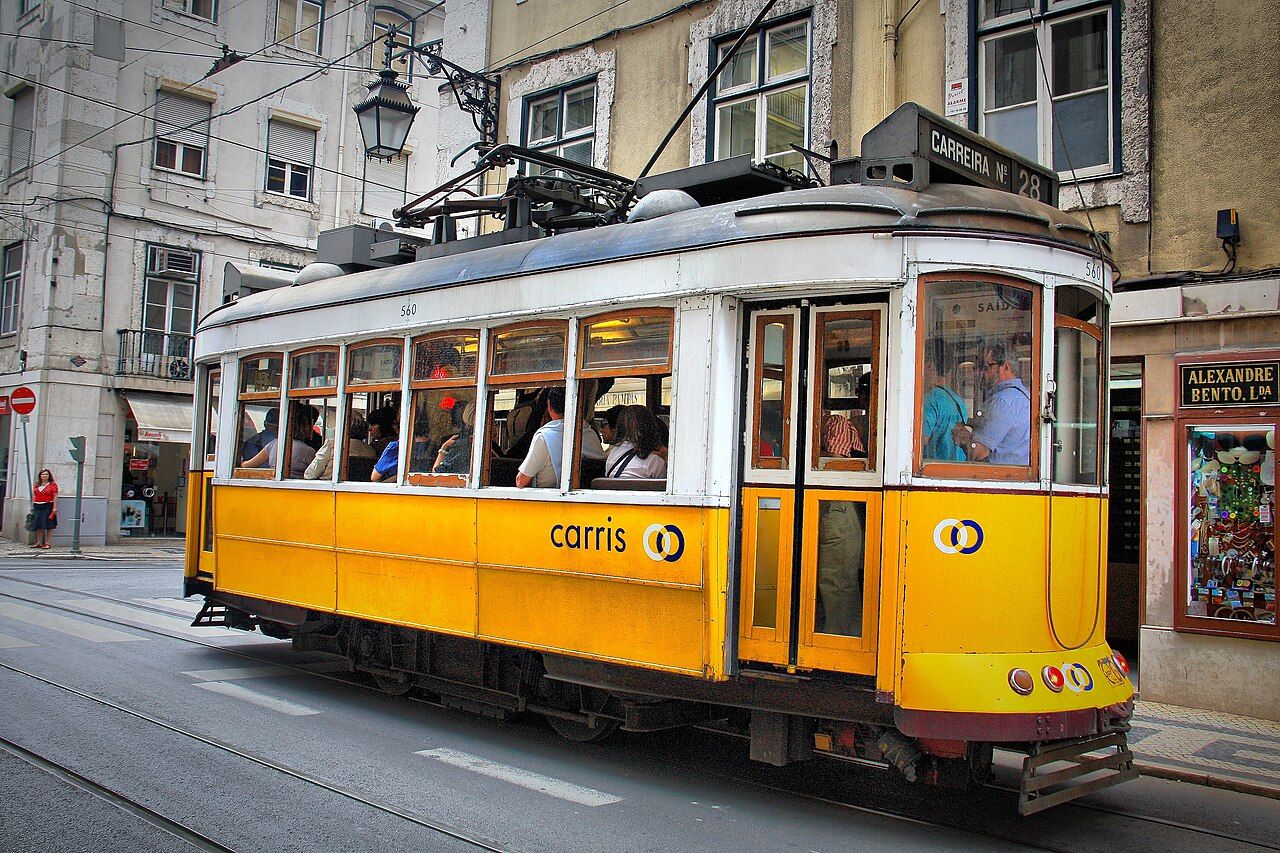
The small yellow cars are called trams. They are old cars rebuilt in the 1990s, and their compact shape suits a line that climbs through several parts of Lisbon. The city’s first electric trams ran in 1901. Today, the trams and buses are run by Carris.
From Martim Moniz, the route climbs through Graça and Alfama. The track is narrow, and in Alfama its curves bring the tram almost against the house walls. From the window, the route is close at hand: a bend, a wall, then the next stretch of track. There is little distance between the car and the street around it.
Alfama has its own pace on this line. The tram has to follow the tight curves rather than take them in a straight run, and the houses sit close beside the track. For a different view of the same neighborhood, we also have a slow climb through Alfama in our notes.
After Alfama, the line passes through the Baixa and Chiado. The order matters: the route moves from the climb through the older streets into these central districts, then continues toward Estrela. We follow that sequence from the window rather than treating the tram as a quick ride between two endpoints.

Next on our list: Sintra When the Clouds Come Down
Estrela marks the western part of the route. The Basílica da Estrela stands near the line’s western end; it was finished in 1790. Opposite the basilica is the Jardim da Estrela, a public garden with a bandstand. These are clear landmarks to keep in view as the ride approaches Campo de Ourique.
For the ride in the other direction, boarding at Campo de Ourique is usually calmer than boarding at Martim Moniz. That is the useful adjustment for avoiding the busiest queue: start at the Campo de Ourique end, then take the line back through the districts. In winter, queues are much shorter than in summer.
There is no need to separate the ride into a collection of stops to understand its shape. The line climbs through Graça, Alfama, the Baixa, Chiado and Estrela, with the close turns in Alfama and the basilica near the western end giving the route its most distinct markers.
From end to end, Tram 28 is a small yellow car following a narrow track across the city. At Martim Moniz, the queue sets the scene; at Campo de Ourique, the cemetery marks the endpoint. Between them, the window keeps returning to the route itself: the climb, the curves and the changing names of the districts.