Lisbon · Sintra
Sintra When the Clouds Come Down
A full day from Lisbon by train leads into cooler, damper hills, where palaces, a castle and forest paths sit in the Atlantic cloud.
- Part of town
- Sintra hills
- Give it
- a full day
Trains from Rossio station take about 40 minutes to reach Sintra. For a full day from Lisbon, the journey leads into hills that catch cloud from the Atlantic and are cooler and damper than the city.
- Train: Rossio station to Sintra, about 40 minutes.
- Time: a full day.
- Setting: hills that catch Atlantic cloud.
40 minutes: Rossio to the hills
The train is a different start from a morning among Lisbon's oldest lanes. In Sintra, the change is not only from city to hills. The Cultural Landscape of Sintra was listed by UNESCO in 1995, and the cloud is part of what defines this place: the Atlantic reaches the hills, bringing cooler, damper conditions than in Lisbon.
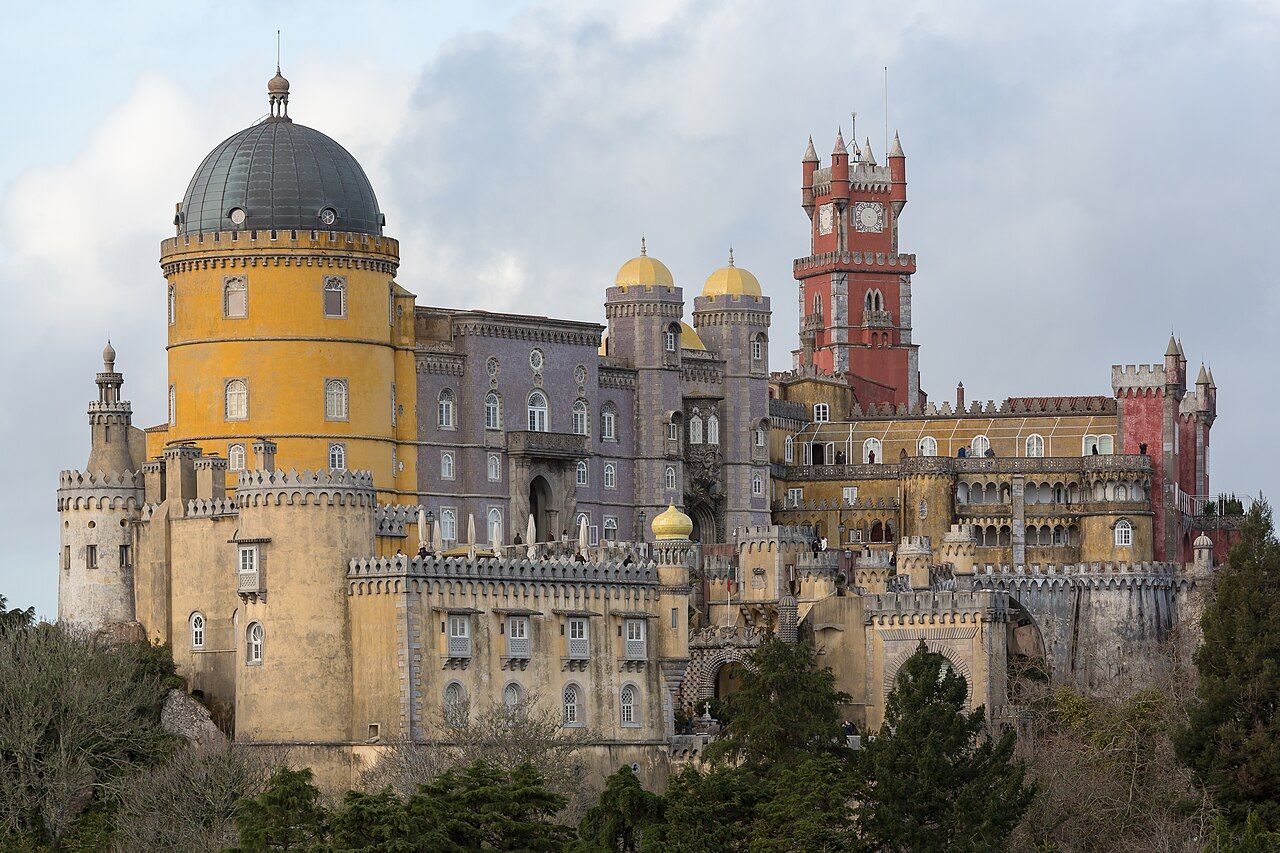
In the off-season, that weather can be part of the day rather than a reason to look away from it. Cloud softens the outline of the hills and settles around the buildings. The colors of Pena remain easy to name: red, yellow and grey. The mist and the painted palace belong in the same view, with the hilltop above the town setting the scene.
Next on our list: Belém in an afternoon: monastery, tower and tart
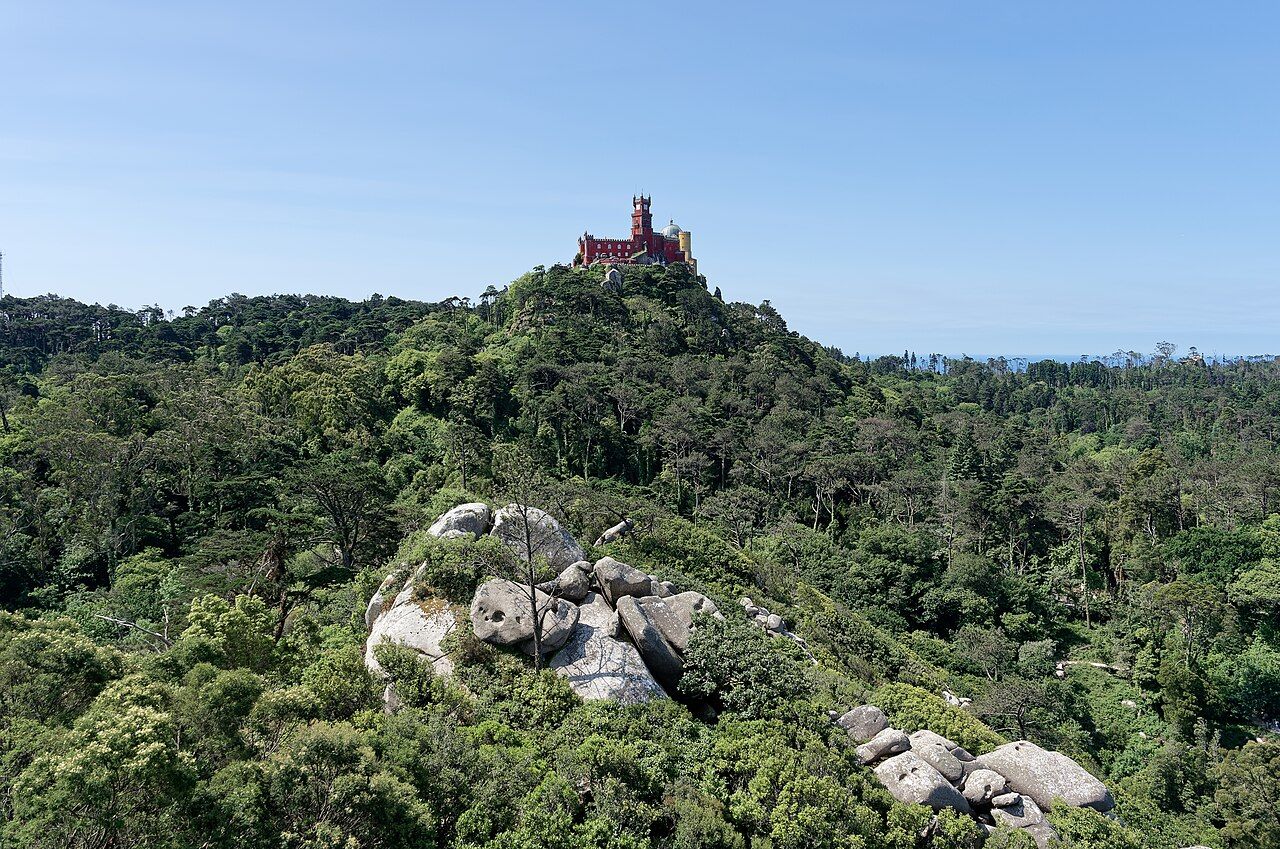
Pena Palace was built in the 19th century for King Ferdinand II. Its hilltop position makes it a clear landmark in the landscape, while cloud can gather around the slopes below. We keep the scale of the place in mind: a palace above the town, not a building set apart from the hills around it.

9 levels, then the ridge
The Moorish Castle stands on the next ridge. It dates from the 8th and 9th centuries, giving the landscape another kind of structure beside the palace. From one ridge to the next, the cloud can make the distance less distinct; the hills themselves remain the link between the two.
Back in the town center, the Sintra National Palace is known for its two tall conical chimneys. They give the building an outline of its own. The town and the higher ridges are different parts of the same day, close enough in the story of the landscape to move between them without losing the thread.
At the Quinta da Regaleira, the spiral initiation well goes down nine levels. The detail is strikingly direct: a spiral, descending through the ground. It offers a contrast to the open hills and cloud above, and to the tall chimneys in town. Sintra moves between these views without needing the cloud to lift for the place to make sense.
Paths through the forest link the castle and the palace on foot. That connection gives the day a quieter line between its landmarks: hills, trees, ridges and buildings, rather than a sequence of separate stops. In damp weather, the forest and the cloud share the same muted setting (and the path remains part of the landscape).
Sintra's pastries bring the day back to the town. Travesseiros are puff pastry with almond cream; queijadas are small cheese tarts. Their names and fillings are a useful last detail after the scale of the palaces, the castle and the well.
When cloud comes down, the last picture is not a distant view. It is the forest path between the ridges, with the outlines of the buildings held close by the mist.