Ghent · Graslei
Graslei, Korenlei and the Three Towers
An hour across Ghent's old port, from the facing quays and guild houses to the three towers, then back after dark.
- Part of town
- the old port
- Give it
- an hour, and again at night
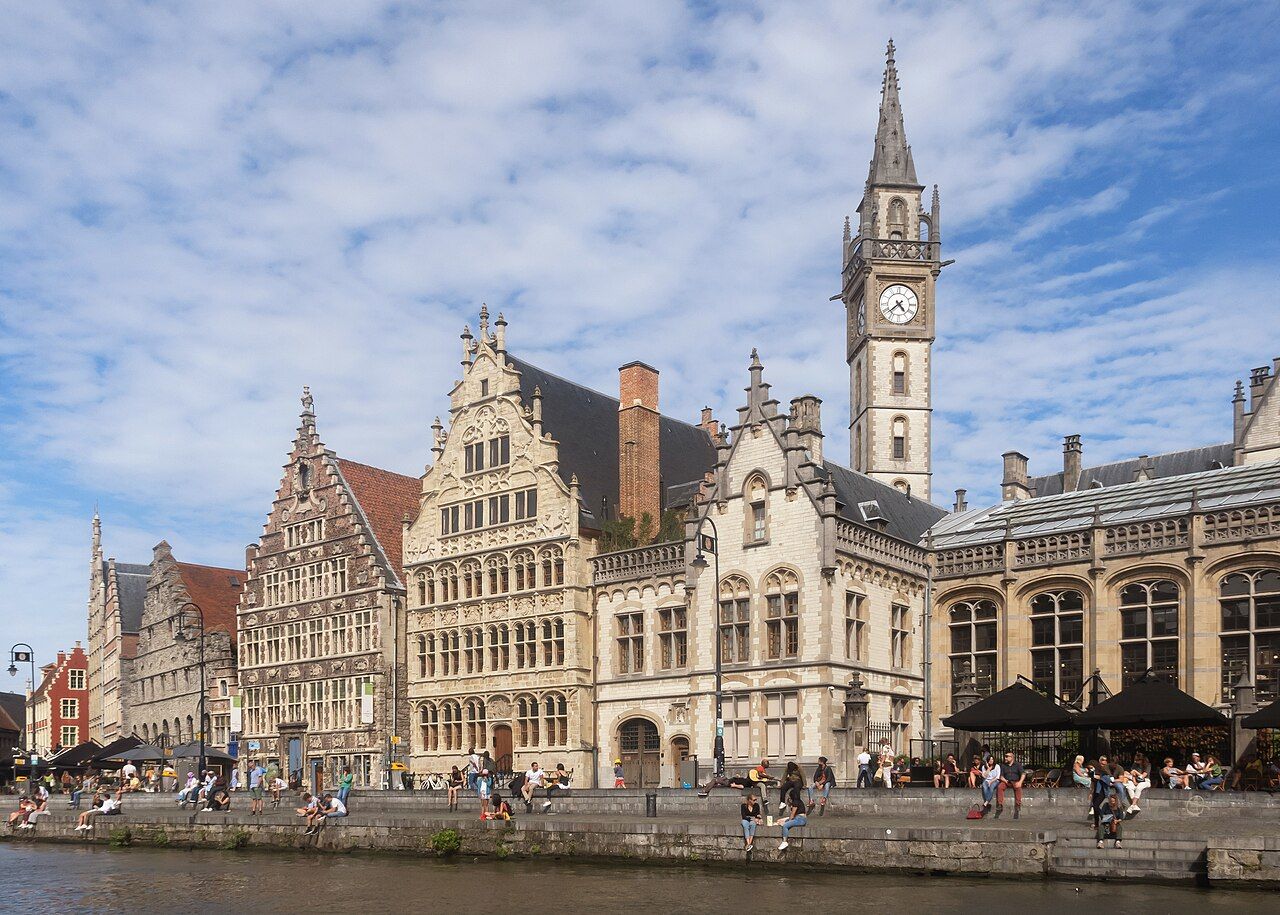
We keep coming back to the same small puzzle: at the Graslei, the Korenlei is already part of the view. The two quays face each other across the Leie, so the visit has two sides from the start. The towers wait beyond them, in a row from St Michael's Bridge.
- District: the old port
- Time: an hour, and again at night
- View: three towers from St Michael's Bridge
1. Morning
Start with the quays as a pair. The Graslei and the Korenlei face one another across the Leie; looking at one means the other is in view too. The guild houses along them date from the Middle Ages to the 17th century. Their dates cover a long span, and the quays make it easy to take in the two sides together rather than treating one as a separate stop.
Ghent grew rich in the Middle Ages on cloth. That history gives the guild houses a place in the story of the old port, without needing to leave the water’s edge. Look from one quay to the other, then notice the different buildings rather than trying to make the two banks into a single row.
The Spijker is a Romanesque grain store dating from around 1200. Its name and date give the view a specific point to hold on to among the guild houses. The quays are not only a frame for the buildings: they are also where boats for canal trips leave from the Graslei.
2. Midday
Make St Michael's Bridge the point to pause and look along the line of towers. From there, the three are St Nicholas' Church, the Belfry and St Bavo's Cathedral. The view gathers them into one sight, while their names make it possible to follow the row in sequence.
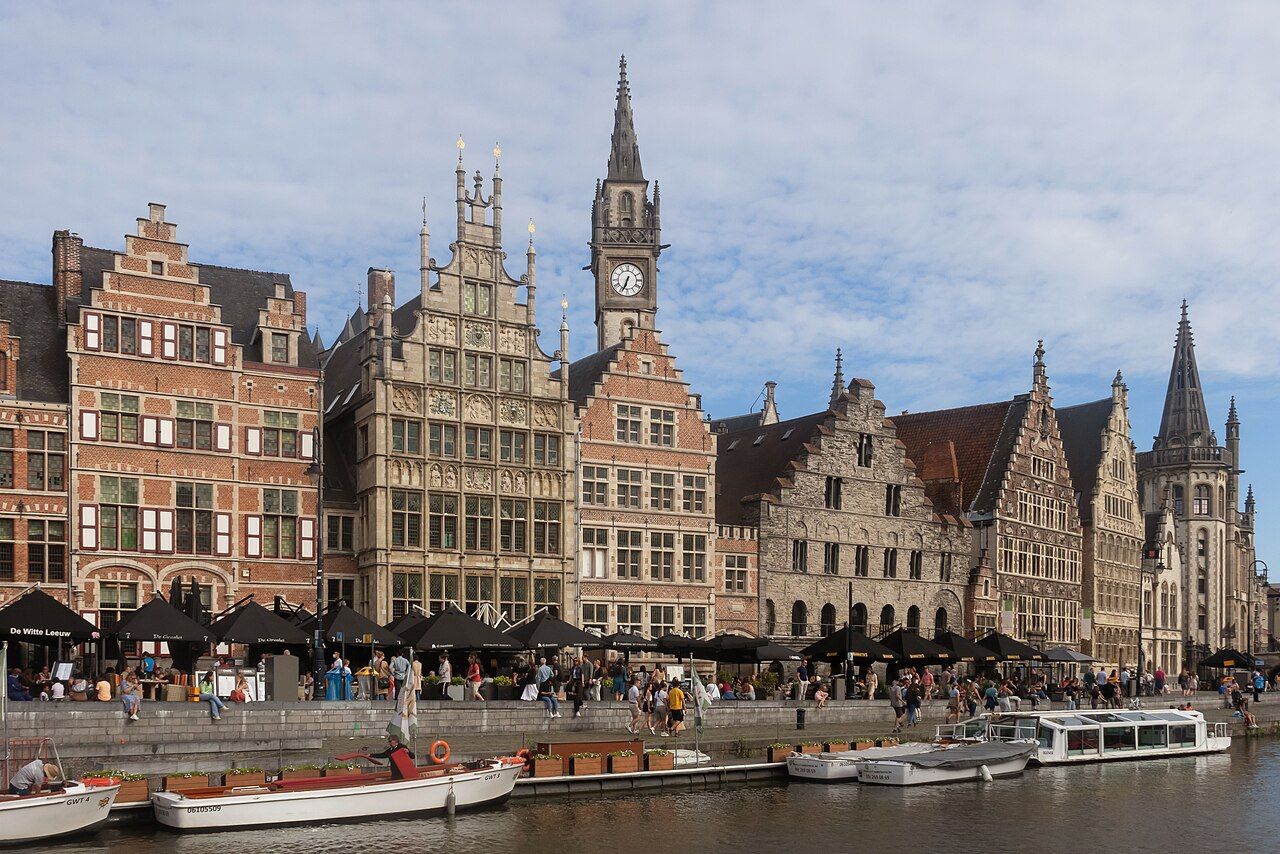

The Belfry also has a place beyond this view. Ghent's Belfry was listed by UNESCO in 1999 with the belfries of Belgium and France. The quays, the bridge and the towers belong to the same itinerary, but they offer different ways to read the city: the river-facing guild houses on one side, the skyline from the bridge on the other.
Ghent’s wider story also has the Van Eyck altarpiece in it. Here, though, the route stays with the old port: two facing quays, the buildings beside them, and the three towers beyond.
3. Late afternoon
Use the later part of the day to see the quays and the bridge as one sequence. The Graslei gives the canal boats their departure point; the Korenlei faces it across the Leie; St Michael's Bridge gives the long view toward the towers. The order matters more than adding distance to the itinerary. It keeps the pieces of the old port connected.
There is room in an hour to look across and back, spend time with the guild houses, and stop at the bridge. We like the bus-window version of a city, where separate views pass in one frame; here, the bridge does that work while we stand still. The Spijker, the guild houses and the towers are distinct parts of the same view.
Next on our list: Gravensteen: The Counts’ Castle
After dark, the city lighting plan lights the quays and towers. Return to the same views rather than looking for a different route: the two banks still face across the Leie, and the three towers still line up from St Michael's Bridge. The change is the lighting, which draws the itinerary back to the places already seen by day.