Copenhagen · Copenhagen
A Day on a Rented Bike in Copenhagen
A bike day in Nørrebro and around the lakes, with separated lanes, clear hand signals, and two bridges that make the city’s cycling routes easy to picture.
- Part of town
- Nørrebro and the lakes
- Give it
- a day
We learn the city’s stopping signal before we have gone far: cyclists raise a hand to show they are stopping. On a rented bike, that small gesture is part of reading the ride around us. Copenhagen has a lot of people cycling to work and study; roughly half of all those trips are made by bike.
- Area: Nørrebro and the lakes
- Time: a day
- Route ideas: the path around the three city lakes, Queen Louise’s Bridge, and the Cykelslangen
On most main streets, bike lanes are raised and separated from car traffic by a kerb. The separation gives the route a clear edge: the bike lane is its own strip beside the street. We keep to that lane and watch how other riders use it. Slow riders stay to the right, leaving room for others to pass on the left.
There is a rhythm to this that is easy to notice once we are moving. Keep right when riding slowly; raise a hand to signal a stop. The rules are small, but they make the shared lane legible. We do not need to turn the ride into a race or try to keep pace with everyone around us. The useful thing is to be predictable.
The path around the three city lakes makes a natural outline for the day. It runs for about 6 km, so the water can be the route’s steady reference point rather than a reason to hurry from one stop to another. Queen Louise’s Bridge sits between the lakes and is one of the busiest bike routes in the city. Here, the everyday flow of bikes is part of the view.
Crossing it also makes a good moment to remember the lane habits: keep right if moving slowly, and show a raised hand when stopping. We can take the lakes at our own pace and let the bridge show what cycling looks like when it is not just a visitor’s way to get around.

Nørrebro brings another kind of pause. Hans Christian Andersen and Søren Kierkegaard are buried in Assistens Cemetery in the district. It gives the day a quieter point between stretches on the bike. We can leave the lakeside route for a while, visit the cemetery, then return to the simple plan of following the water and the lanes.
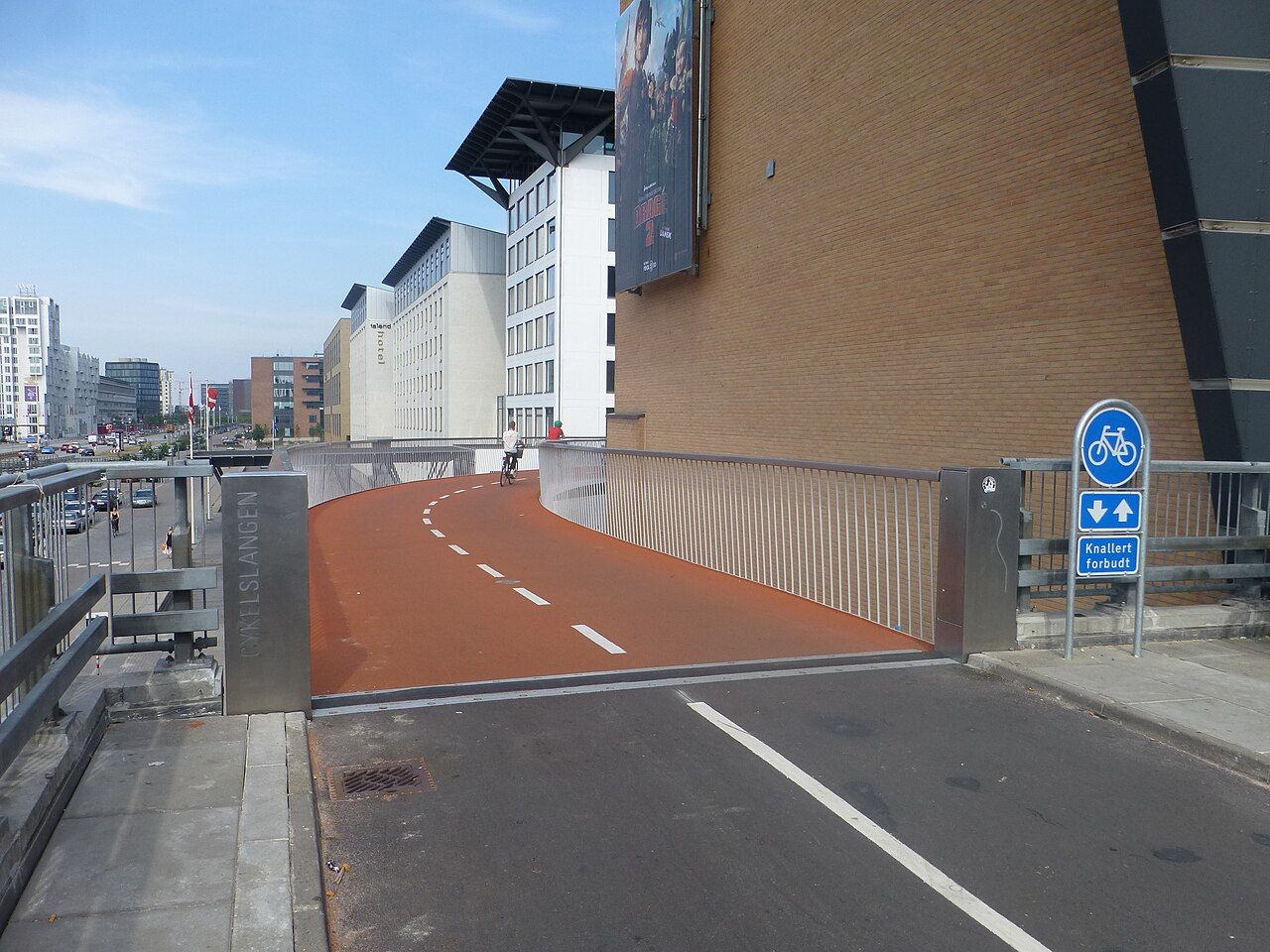
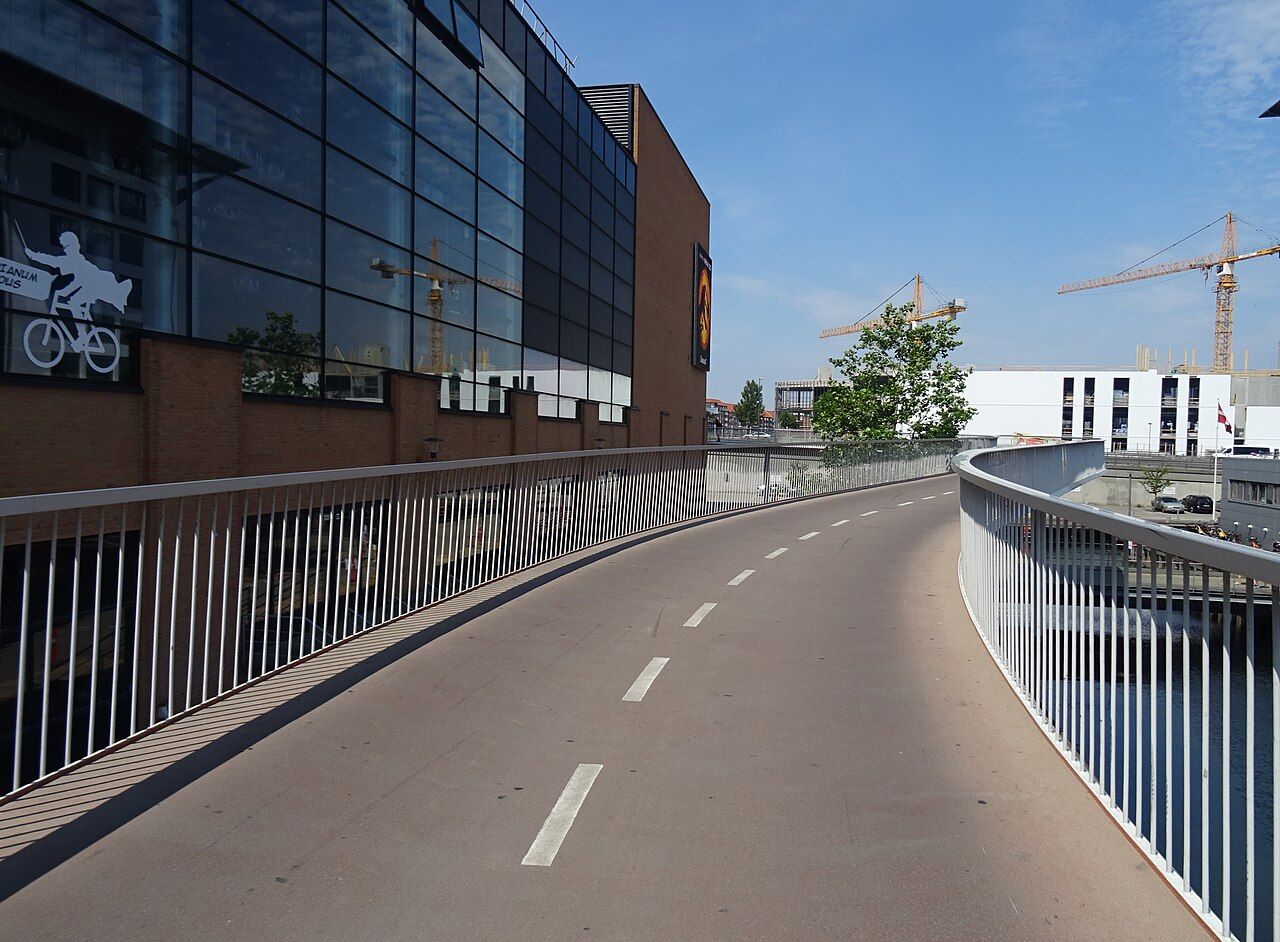
There is also the Cykelslangen, a curving orange bike bridge that opened in 2014. Its shape makes it stand out among the routes we have been following. The day can hold both kinds of crossing: Queen Louise’s Bridge between the lakes, and this orange curve. The route need not be a checklist. We can choose the bridges as markers and let the ride between them do the work.
For a different line of sightseeing, there is the corkscrew spire. Bikes can also be taken on the S-trains, which gives the day another way to include a ride without making every stretch depend on the bike.
By the end, we are back with the lakes beside us and the bike lane under the wheels. A rider ahead keeps to the right; another passes on the left. We raise a hand when it is time to stop, and the route settles into a small, ordinary scene of water, bikes, and a shared way forward.
Next on our list: Roskilde: the monarchs’ cathedral and Viking ships